

Key takeaways:
- Managing 3CX systems one at a time hides cross-system patterns you’d catch instantly with a combined view
- Backup health, extension counts, and configuration drift are invisible when siloed by system
- Centralized visibility turns hours of dashboard hopping into a single screen
- The cost isn’t one big failure — it’s routine checks, missed issues, and stale data compounding over time
The Blind Spot in Single-System Management
Every 3CX system you manage has its own dashboard. Each one shows you exactly what’s happening on that system: extensions, trunks, backups, resource usage. For that single system, the view is fine.
The problem is what you can’t see when you’re looking at systems one at a time.
Is the same backup misconfiguration happening on three different systems? Are call recording settings drifting from your standard across a specific client vertical? Is a pattern emerging that you’d catch in five seconds on a combined view but would take an hour of hopping between dashboards to notice?
You don’t know. You can’t know. Not when your visibility is siloed by system. This is the core problem that centralized 3CX management solves.
What Centralized Visibility Actually Changes
When you can see every system you manage from one place, problems that were invisible become obvious.
Patterns Across Systems
A setting that’s wrong on one system is an oversight. The same setting wrong on eight systems is a process problem — maybe your deployment checklist is missing a step, or a recent change propagated incorrectly. You can’t spot that pattern when you’re checking systems one by one.
Backup Health at a Glance
“Did backups run across all my systems last night?” Answering that question today means logging into every system individually, or trusting a homegrown script that might not be up to date. With centralized monitoring, it’s one screen. Failed or missing backups surface immediately.
Extension Tracking Across Your Portfolio
How many active extensions are you managing across all systems? Which extensions are offline? Which systems have extensions provisioned but never used? This is the kind of data you need for accurate billing, capacity planning, and client reviews — and it’s scattered across dozens of dashboards right now. Controvo’s Phones table goes further: track when each phone was last seen online and its last known IP, so offline devices stop being invisible.
The Real Cost of Fragmented Visibility
The cost isn’t dramatic. It’s not a single catastrophic failure. It’s the slow accumulation of time spent on things that should be instant:
- Routine status checks that eat hours every week because you’re logging into each system separately
- Missed issues buried in one of dozens of dashboards that nobody happened to check today
- Client reviews where you’re manually compiling data from individual systems into a spreadsheet
- Billing discrepancies because extension counts are stale by the time you’ve finished counting them manually
None of these individually feels like a crisis. Together, they’re the difference between a team that’s managing systems and a team that’s drowning in dashboards.
What This Looks Like With Controvo
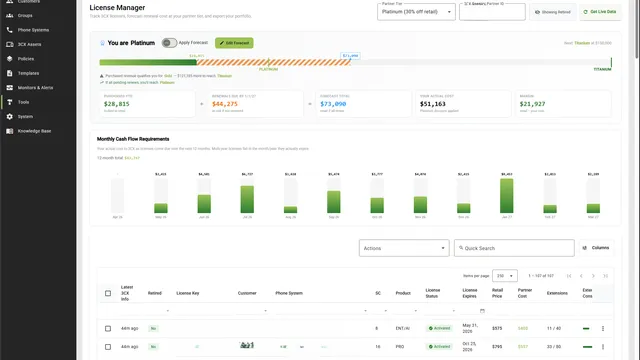
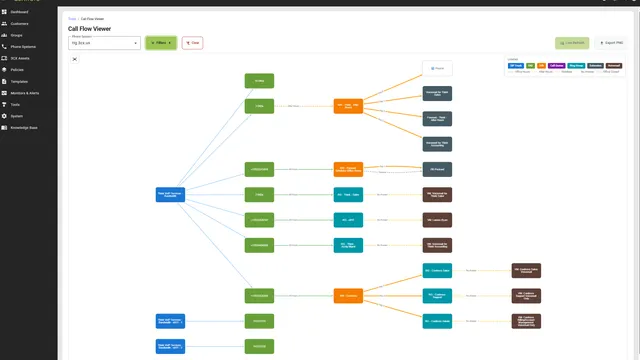
Controvo aggregates data from every 3CX system you manage into a single dashboard. System health, extension counts, backup status, license expirations, resource usage. All visible in one place.
But visibility is just the starting point. Controvo’s policy engine lets you define your configuration standard and enforce it across every system. Drift triggers an alert, an automatic fix, or both. That’s the difference between seeing problems and preventing them — and it’s why we built an RMM purpose-built for 3CX.
Want to see what centralized visibility looks like for your portfolio? Apply for the pilot program or ask us anything.